


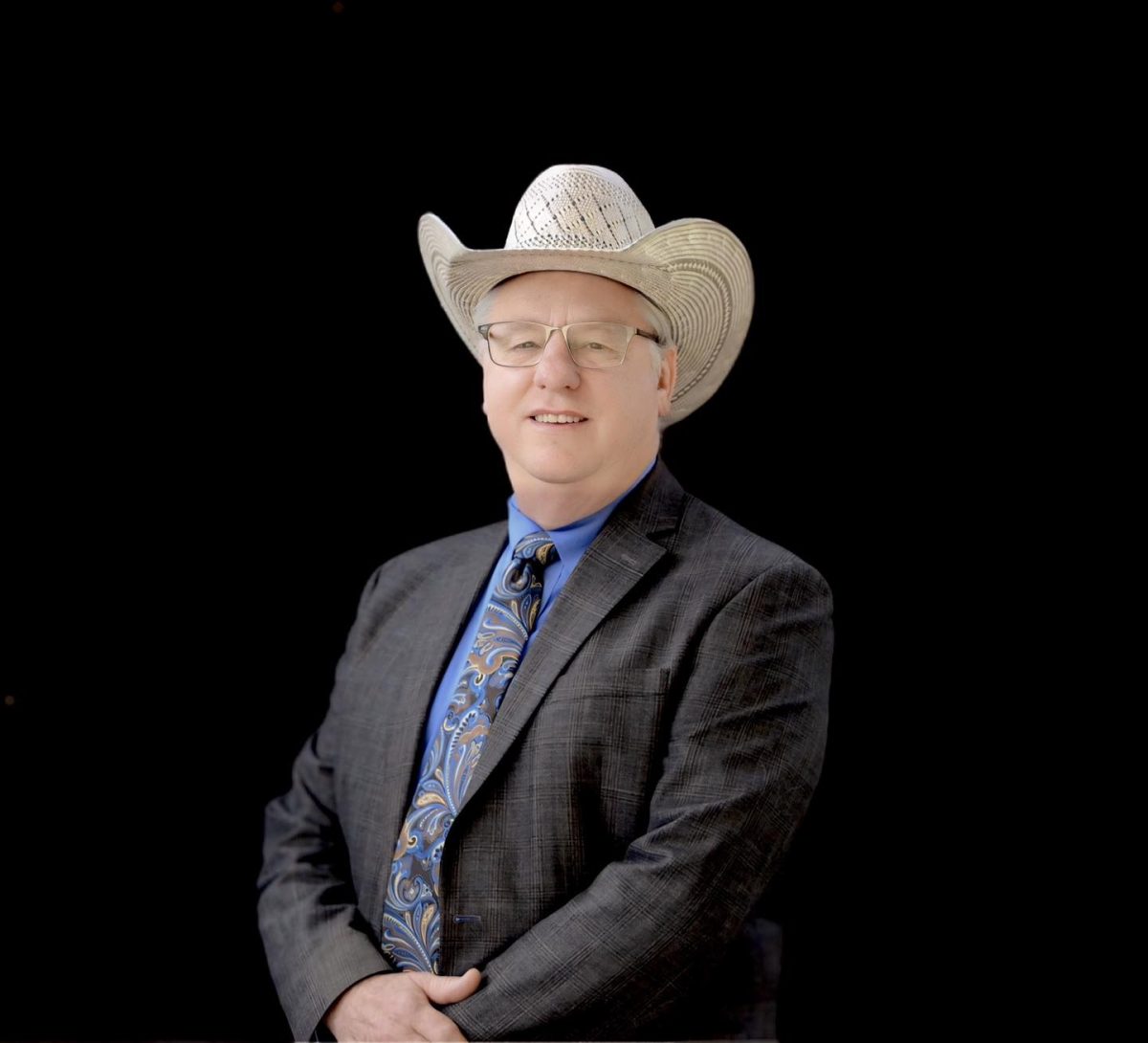
Just 316 miles outside of Manhattan, in the small town of Alfred, N.Y., Stephen Shank sat in an unadorned conference room, waiting.
Shank, the director of equestrian studies at Alfred University, was eager to hear from the institution’s new president, Mark Zupan. But instead of unspooling a master plan or fielding questions from faculty, Zupan posed one.
“If I come to you tomorrow, and say, ‘I’ve got $10,000 for you, I’ve got $100,000 for you, or I’ve got $3 million for you,’ what are you going to do with it?” Shank recalls the newcomer inquiring.
The question, asked nearly a decade ago, stuck with Shank. Today, it shapes his work in the nonprofit sector. As head of the largest equestrian facility in Virginia, Shank finds planning based on resources and funds to be more advantageous than any five-year plan.
“I wanted to be able to fix anything,” he said. “The reason I got this job [at the center] was because I’ve done so much in so many different areas.”
Shank, who became the Virginia Horse Center’s CEO in March 2024, oversees the 620-acre property, which brings in roughly $8 million in revenue each year. The facility features nine show rings, eight schooling rings, a 4,000-seat indoor arena and even a cross-country course.
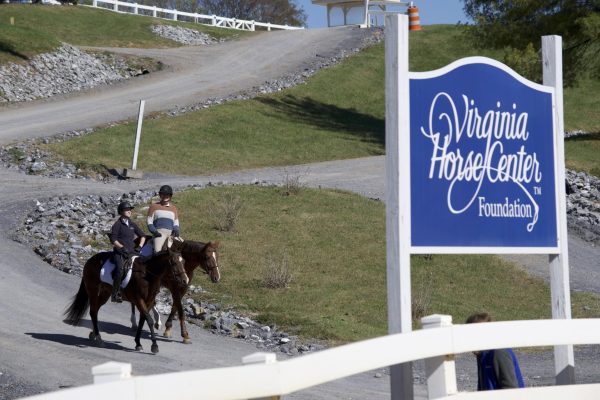
“I have to pinch myself every day,” he said. But Shank’s professional career extends well beyond the equine industry.
From trimming cabbage to auditing for a casino and repairing cars in a family-owned garage, Shank has done a bit of everything.
Shank earned a bachelor’s degree in accounting from Niagara University at 49 and a master’s in the same discipline at 52. The native New Yorker is a self-described “nontraditional student.”
He decided to pursue higher education after Nabisco closed the factory where he worked for 28 years, shredding the wheat used to make Triscuits.
“I had to reinvent myself,” he said. “I had to figure out what [I] was going to do [for] myself and my family.”
Even during his factory years, Shank continued his passion for horsemanship by running a small equestrian business on the side.
“I worked the horse business in the mornings — training horses — and then I worked at the factory from 3:00 to 11:00,” he said.
Though he claims to be retired, the 71-year-old continues to work seven days a week alongside a staff of 40 employees.
While Shank has been in the role for just under two years, the center celebrated its 40th year of operation in 2025. It sees over 12,000 horses annually, and according to an economic impact study, the center attracted 81,000 tourists in 2019 who, on average, “spent $84.50 per person per day in Virginia.”
Despite the center’s reach, Shank said the community wasn’t interested in local partnerships with the center when he first took over.
“I couldn’t get meetings, I couldn’t make headways in a few of the places that I wanted to,” Shank said. “The people here are wonderful, but if you call a hotel and you want to get a deal, it’s, ‘Nah, I don’t even want to have lunch with you.’”
But Shank said the skepticism wasn’t personal.
A history of financial instability coupled with shaky economic conditions at the time of his arrival meant few locals were inclined to jump into new business endeavors, especially those with an unfamiliar face behind them.
Originally launched with state support in 1985, the center is still working to repay two loans from the U.S. Department of Agriculture and CornerStone Bank. In 2007, the VHC refinanced with an $11.5 million USDA loan but struggled with payments.
To ease the burden, the city of Lexington and Rockbridge County now dedicate three percent of their lodging tax revenue—about $700,000 to $1 million annually—to the center.
Though the center’s financials recovered before Shank took over, a recent influx of billionaire-backed equestrian venues in the Midwest has posed a challenge for the horse center as it works to fill its 49-week event schedule.
“Over the past two months we’ve bid on a national horse show that would have been eight days long, 400 to 500 horses, which would’ve been a great fit for us, but another 20 large facilities bid on the same job, and we ended up losing it,” Shank said. “If we would have been any place on the Mississippi River—a little bit further west—we would have got it.”
With 745 stalls, the center has been focused on securing what Shank calls “large” horse shows: those with 500 to 700 horses. But industry changes have forced the CEO to revise his approach.
“We’ve come to the realization that instead of running one horse show, we [can] try to run two or three at a time,” he said.
Last month, the center hosted the annual county fair along with two medium-sized horse shows. Shank said the shows “ended up being lucrative” for the center.
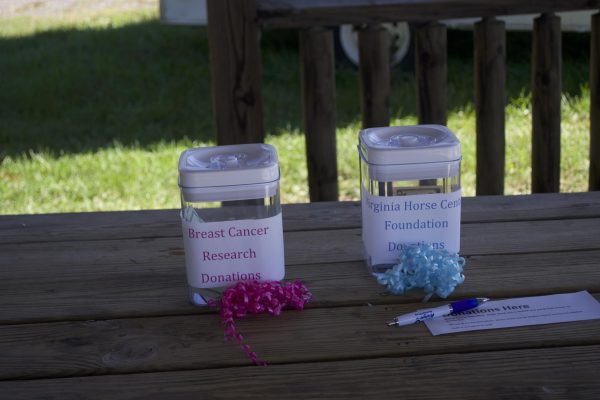
The nonprofit facility relies on donations to fund upgrades and maintenance. Last year, the horse center spent roughly $800,000 changing the footing in seven of its arenas—a price tag that Shank said was covered mostly through philanthropy.
“Every three months I come up with a new set of things that we want to do,” the CEO said.
Current projects include converting barn lighting to LEDs and completing a new blacksmith barn, which is slated to open within the next month.
For many locals, changes have been gradual but noticeable. Jade Condrell, ’26, who grew up competing at the center, said she’s seen steady operational improvements.
“This ring is semi-new,” Condrell said, pointing to the Tardy Arena. “When I was a kid, this wasn’t here, but the Coliseum where all the big stuff happens [has] been the same for years.”
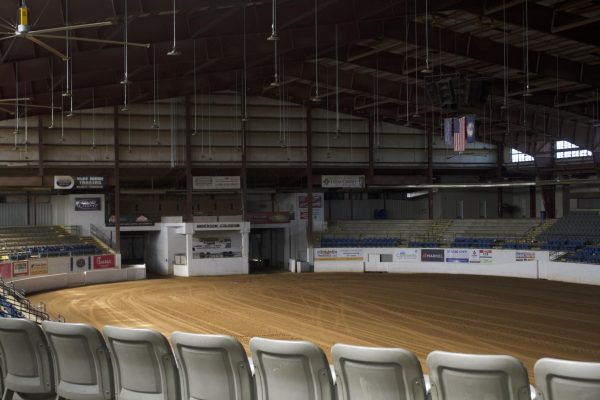
(Liz Trubeck)
While the facility’s appearance hasn’t changed drastically, Condrell said its management has.
“It moves faster,” Condrell said. “Sometimes if it’s poorly organized, there’s empty rings all the time and no one’s getting it done.”
Horse shows and collegiate competitions, like the one Condrell was competing in, remain at the heart of the center’s business model, but its most reliable income comes from other ventures.
VHC’s biggest moneymaker doesn’t prance, jump or win blue ribbons. Instead, selling plastic-wrapped bales of pine shavings and renting out the 120 square foot stalls is what keeps the lights on. Shanks said these quiet, practical offshoots have become critical operations of the business model.
As the center upgrades its arenas for future riders, the CEO said he’s finally found his own footing. Shank says he’s staying in Lexington for “as long as they’ll have me.”