


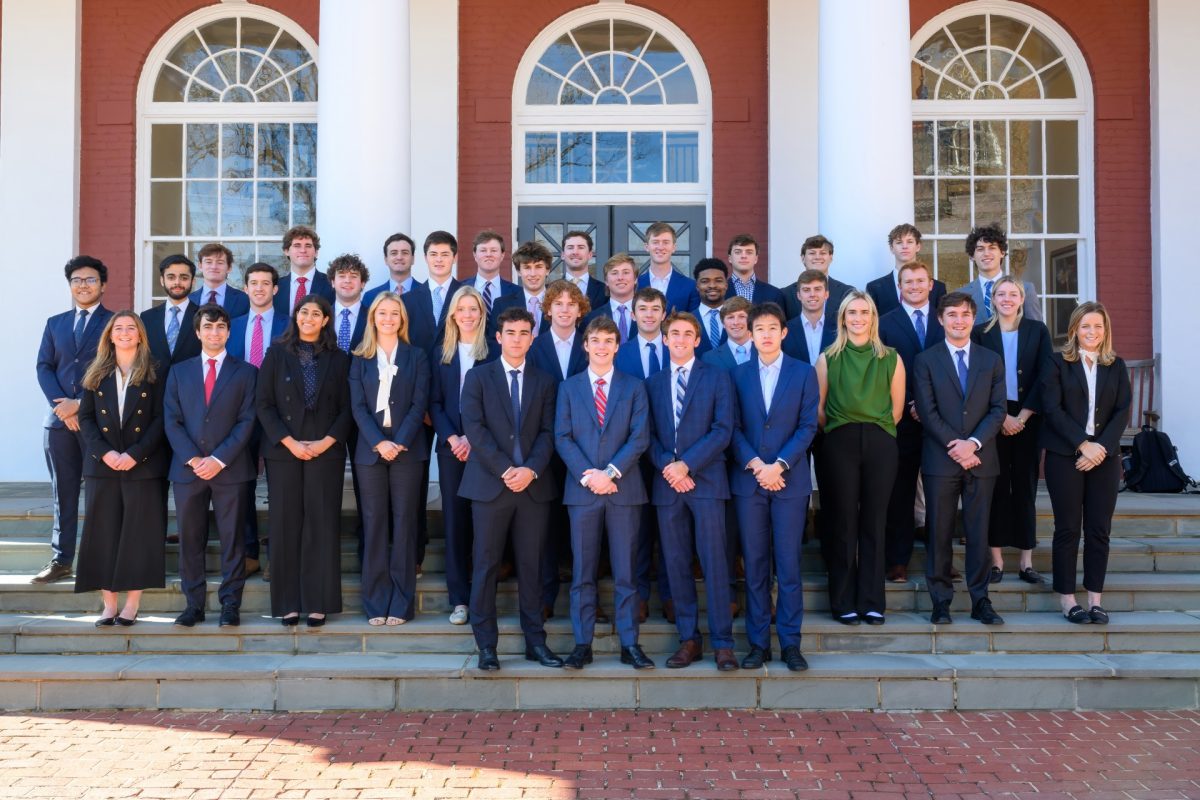
The Williams Investment Society (WIS) is a student-run organization that manages nearly $29 million of Washington and Lee University’s endowment. Since its 1998 formation, it has multiplied a million-dollar investment from the Board of Trustees into a much larger sum.
The society organizes itself into 10 industry groups, which identify companies they may want to invest in and conduct extensive research. Recently, the energy group, led by Nathaniel Fisher, ’27, proposed selling a portion of their Diamondback stock and reallocating into Baker Hughes.
After the energy pitches proposal, a form was sent out to group heads where each of the 10 heads voted on and elected a simple majority. If passed, students reinvest as proposed.
Membership and leadership positions within WIS are intentionally selective to ensure strong management of funds, Executive Director Preston Childress, ’26, said. Students become eligible for group leadership roles beginning their sophomore year.
“Group heads go through a fairly rigorous application process. You’ve got to go out and build a financial model yourself, and then present it to the directors,” Childress said.
Students entrusted to manage the endowment operate under structured safeguards and oversight designed to protect university assets, Childress said. For instance, students are only allowed to use funds for long-only investments, meaning they can buy stocks but not bet against them.
“We buy stocks at hold, but we’re not shorting anything or doing options,” Childress said.
Another safeguard is the society’s faculty advisor, Finance Professor Aliaa Bassiouny.
“Part of the role of the faculty advisor is that you just make sure that you supervise the students, following the due process when they do their investments,” Bassiouny said.
The club has “an enormous amount of support from Professor Bassiouny, who’s fantastic,” Childress said.
Bassiouny said these systems of oversight and trust have allowed the society to operate successfully for decades.
“There’s a sense of trust because every senior that graduates hands over right to the new generation. And so since 1998, there’s been a kind of continuity,” Bassiouny said. “For example, the group that pitched NVIDIA 2019 — they graduated. But the society had very good returns from that, and they trust the future generations to come in and do the work.”
Beyond growing the university’s endowment, students gain valuable hands-on experience, she said.
“Instead of just taking a class, they get to go and practice, evaluate a company, see how the company’s managed, build financial models, analyze it — the technical things that are useful for them, especially if they go out to the job market,” Bassiouny said.
In addition to technical skills, Childress said students learn valuable soft skills. “How to work well with people, learning how to communicate well, learning how to lead and learning how to be a good member when you’re not leading,” he said.
Ultimately, WIS’s success isn’t driven solely because of skills, Childress said. He said the range of backgrounds, perspectives and academic interests of its members strengthen the society.
“We do a good job because we have a lot of people from very different backgrounds, be they personal or academic,” he said.


