


Editors’ note: Hana Chang, ’26, played Pearl in “These Shining Lives” and serves as the Ring-tum Phi’s Arts & Life editor.
Washington and Lee students brought history to life through their production of “These Shining Lives,” in the Johnson Theatre from Dec. 2 to 5.
The play, based on the true story of four women who worked for the Radium Dial Company in the 1920s and 1930s, follows Catherine Donohue as she suffers from the consequences of painting watch dials with radium-laced paint.
As the play goes on, the harmful effects of radium-lace paint on the women become more apparent. Workers start experiencing health issues, including bone pain and even losing teeth. Catherine and other women workers band together to take a legal action, leading to the transformation of labor law in the United States and Europe.
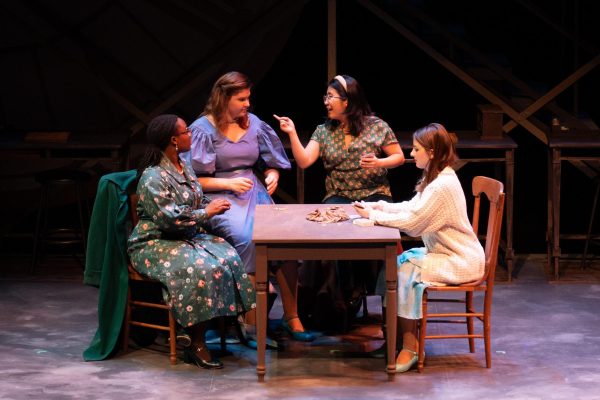
“The play emphasizes the way that working together allows us the strength to fight against injustice,” said Jemma Alix Levy, an associate professor of the Theatre Department and the director of the production.
During the rehearsal, Levy said she focused on infusing the rehearsal process with fun. Levy said from her perspective, rehearsal itself always builds connections between actors, so she didn’t have to create those bonds.
“That’s one of the wonderful things about theater,” Levy said. “Because as an actor, you are constantly being vulnerable and opening yourself up and putting yourself into the work that you do. It means that you are being real and truthful with the people that you’re working with, and that often means that you form strong connections to them.”
Lead actor Ryleigh Love, ’29, who plays Catherine Donohue, described the character as “tenacious” and “gumptious.”
“That’s two weird words to describe her, but I think that a lot of people are willing to write her off as, she’s just a mom. She’s just a protector, and she just has this bite and this spark that is really beautiful,” Love said. “I would like the audience to respect her in a way, to be able to see these historical figures as human, but also, on a level of respect and appreciation for the work they did.”
The cast’s work highlights not only the historical content but also the play’s contemporary resonance, Love said.
“It’s important to remember that these things were not that long ago, that we were not protecting workers very well, only a hundred years ago,” she said. “These protections came from the sacrifices and the pain of people who were willing to fight for the people that come after them.”
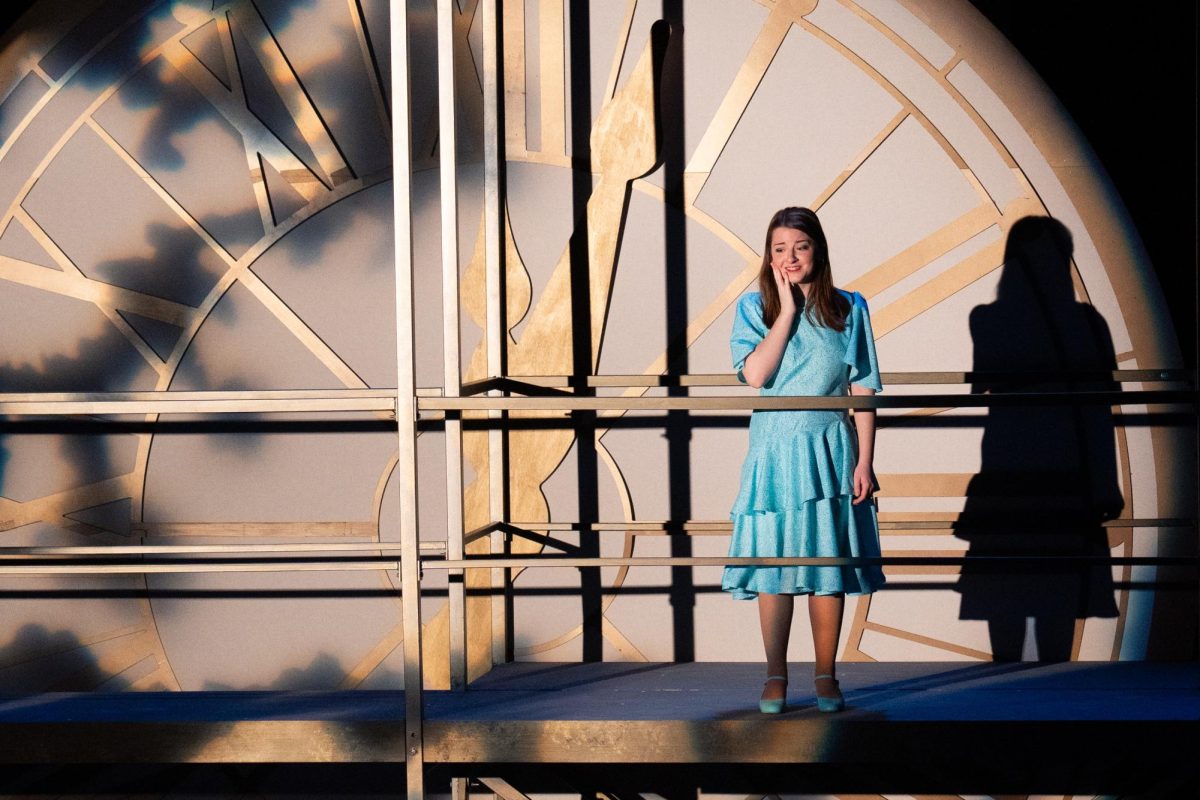
One of the most striking elements of the production is the huge clock on the set, designed by Qingan Zhang, the guest scenic designer.
“This gigantic clock face goes up two stories high and will come to life and light up that is really stunning and beautiful,” Levy said.
The play does not only provide a compelling theatrical experience but also an opportunity for reflection, Levy said.
“Instead of despair, I hope that the audience comes out and recognizes the power of the individual against the machine, the bureaucracy and the power of the ways in which when our communities come together, we connect,” she said.


