


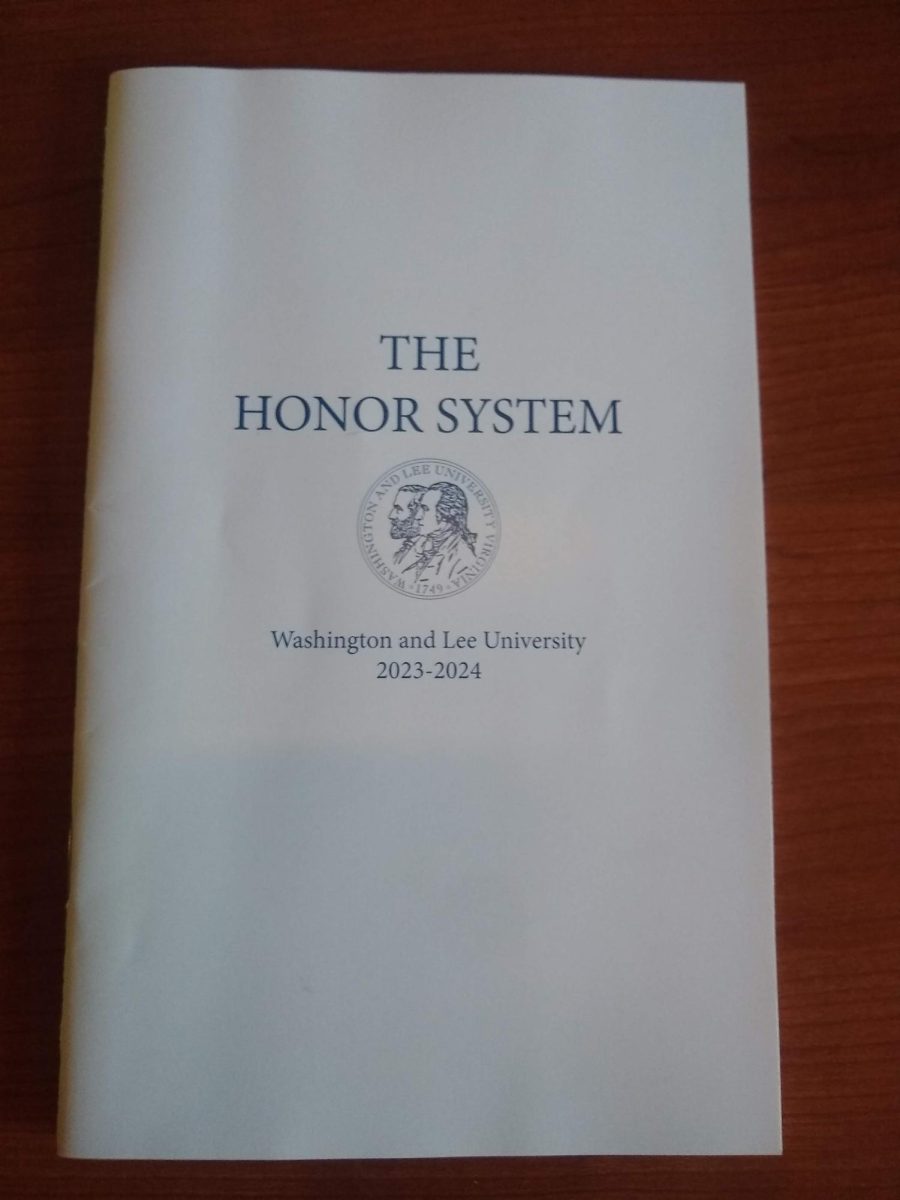
Several of W&L’s representatives on the Executive Committee (EC) and Student Judiciary Committee (SJC)—the university’s main student governing bodies—were elected in unopposed races. During last year’s elections, some positions went unfilled, requiring special elections to fill those seats.
“People should run,” said SJC justice Rebecca Vaught, ’27. “There needs to be more engagement with the process because students need to have a choice of who’s going to represent them.”
Vaught said students are hesitant to run because they don’t really know what the SJC does and therefore can’t be passionate about student justice.
The SJC handles misconduct at W&L, excluding discrimination, harassment, retaliation, sexual misconduct and hazing, according to its website. The EC oversees the Honor System, recognizes clubs and allocates club budgets, according to its website.
The EC and SJC are two separate governing bodies, but both have experienced several unopposed elections in recent years.
Vaught said the SJC’s work is intentionally less visible because their main focus is on restorative justice for students, which does not need to be public.
However, she said, “I would like to see us in the future take on a role where people know at least what we are and what we do a bit more.”
The EC also faces the issue of unopposed elections. EC President Meaghan Endres, ’26, said that the junior representatives and all law representative elections for this year went unopposed.
Vaught said competitive elections are important so students can “make a conscious choice” rather than being forced to have unopposed candidates as their representative.
EC representative Gibson Ward, ’27, said opposed elections have “more engagement with the student body and allows people to question their representatives about what they think about the Honor System and their personal philosophy.”
Endres and Ward said that most EC representative elections are competitive for first years but then taper off. “A lot of people get comfortable with people running. As you get older you might have less engagement,” Ward said.
Former EC member Sam Cook, ’27, said he thinks the demanding work could also deter candidates. “If an honor case comes, you have to drop everything to work on that,” he said.
Endres said that general representative elections tend to be more competitive than officer elections because the time commitment for officers is more significant.
“The last two years, officer elections have been unopposed,” she said. “That’s not because the people running aren’t qualified—they usually are, and have been on the EC a long time. But people often think that if they haven’t been on the EC before, they can’t run for officer positions.”
Ward said that students are often nervous about opposing someone who has already been on the EC, making them less likely to run.
“The only barrier is people not believing in themselves or not thinking they’re qualified,” Endres said.
Both Endres and Ward said the EC is looking for more ways to increase student engagement.
Cook suggested that more transparency about how EC members interpret the Honor System could increase participation. He proposed that each EC member write a brief statement on how they define an honor violation because if students disagree with their representatives’ view of an honor violation, they would be more compelled to run.
“I think we should do more outreach before elections,” Endres said. “More advertising, more panels, more Q&As.”
She is also going to run an initiative to encourage more women to run. Her goal is to have five women on the EC by the end of her presidency; there are currently only four.
Endres and Ward also mentioned a town hall meeting that the EC will likely host next semester.
“I would also appreciate some sense of democracy—some interest in running and getting involved, even if it’s not through elections,” she said.
Ward suggested that all students interview with the Constitutional Review Committee, the committee that reviews the White Book, to share their perspective on the Honor System. Endres also recommended that students attend the EC Business meetings, email representatives, or apply to be a Hearing Advisor.
Cook acknowledged that it is difficult to convince people to run. “It’s hard to encourage someone to do a lot of unpaid work,” he said. “That’s often a thankless job and a really serious, difficult one.”


