

Humanities majors at Washingon and Lee are employed at similar rates as other majors, but fewer students are declaring majors in the arts and humanities, said Dean Genelle Gertz.
But Dean Paul Youngman, ’87, said the decline in humanities enrollment is not unique to W&L. Between 2012 and 2022, the number of students majoring in the humanities fell by almost a quarter in universities across the U.S., according to the American Academy of Arts and Sciences.
“We’re seeing a little bit of that, but we want to not be following that nationwide trend,” Youngman told the Phi. “We want to be as proactive as we can about that.”
Youngman said one of his goals as dean of the college is to increase enrollment in the arts and humanities.
“Students should not be afraid to pursue their passions,” said Gertz, the associate dean of strategic initiatives. “Even though there are a lot of headwinds today about the need to have a return on your investment and questions of the practicality of the humanities, there is so much evidence that you should study your passion and everything else will follow from it.”
According to data from the National Association of Colleges and Employers, 94% of Washington and Lee students were employed six months after graduating. The survey was conducted with data from students who graduated between 2019 and 2023. According to the survey, 94.4% of double majors in the arts and humanities were employed. Additionally, 91.5% of double majors with at least one major in the arts and humanities were employed.
In the class of 2014, 38% of the student body were arts and humanities majors. For the class of 2024, 29% were arts and humanities majors, according to data Gertz collected. The number of students choosing to major in humanities has decreased by 9%, while the number of students choosing to major in accounting and business has increased by 10%. The number of STEM majors has increased by 4%.
“There is no reason that people should not be majoring in the humanities because the outcomes are the same,” Gertz said.
She said Washington and Lee is making an effort to debunk the idea that humanities majors are less practical or employable. These efforts include organizing alumni panels, bringing more speakers to campus and holding info sessions for first years to give them guidance when they are deciding what major to declare.
Gertz also hosts faculty development cohorts, such as the career connections cohort and the medical humanities cohort, so faculty know how to develop coursework applicable to the workforce and prepare students for their future.
“It’s to help students think through the transferable skills from their classes to career settings,” Gertz said.
She said Austin Term was modeled after the popular Washington Term class as a way to take humanities students to Austin, Texas, and allow them to connect with alumni and gain professional development skills. She said the addition of the arts management and creative writing minors are also recent efforts to allow students to study the humanities while understanding how to shape their future.
W&L hosted Alain-Philippe Durand, the Dorrance Dean of the College of Humanities at the University of Arizona, on Thursday, Jan. 29.
Durand talked about the Department of Public and Applied Humanities, which he created as a way for students to pair a practical emphasis with their studies in the humanities. Since 2018, the number of humanities degrees at the University of Arizona has increased by roughly 35%.
“I talk to employers, and they say they need people who can communicate well, who can think critically and problem solve, and it is in the humanities where students learn these skills,” Durand said.
Durand said the media portrays the humanities in a negative light. He said these areas of study are framed as “dying,” but, in reality, they just need to be marketed better.
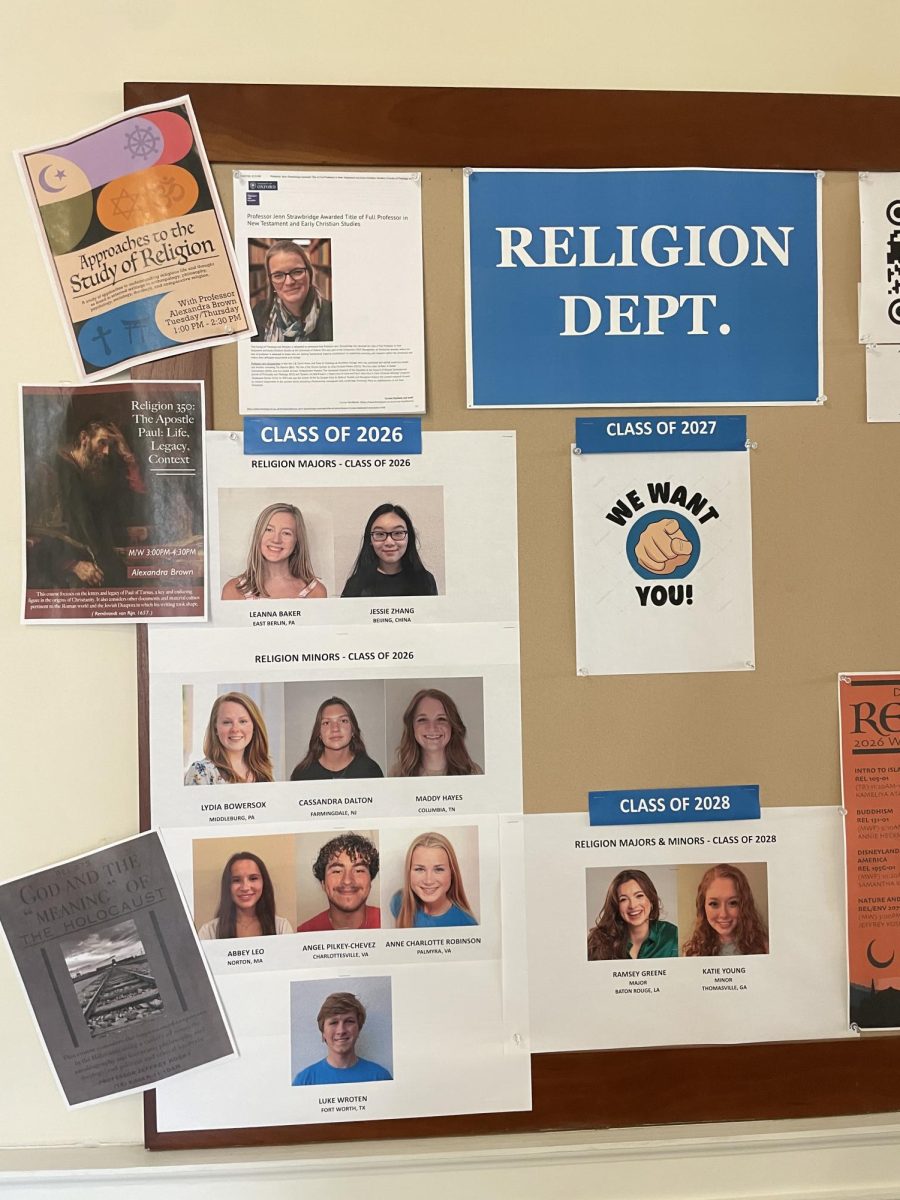
“I didn’t agree with what he was saying because he was missing the inherent value of the humanities. They are not only valuable when paired with another, more ‘practical’ area of study,” said LeAnna Baker, ‘26, a religion and politics double major.
“I think we should resist the urge to fold the humanities into the careerism chatter that dominates the modern university,” said Baker. “Learning is an end in and of itself, and I think the true strength of the humanities lies in their ability to disrupt this tendency to view academia as only helpful for adding skills to a resume.”
The university recently received money from the Hal and Barbra Higginbotham Endowment for the Arts and Humanities, which they plan to use to continue efforts to raise visibility and emphasize opportunities in the humanities, Gertz said. She said the university would like to host speakers like Durand more frequently.
“Some of the things that we found in our research as well is that students see a kind of hierarchy on campus, with STEM and the business school being perceived as more prestigious and significant and the humanities as being less important,” Gertz said. “We have more work to do.”


