

Washington and Lee is considering ideas for a new transportation resource to help injured students navigate campus.
Several ideas involving golf carts are being discussed, including collaborating with Traveller, forming a student-run transportation group or training health center work-study students to drive injured students, according to Dr. R. Allen Blackwood Jr., university physician and director of student health.
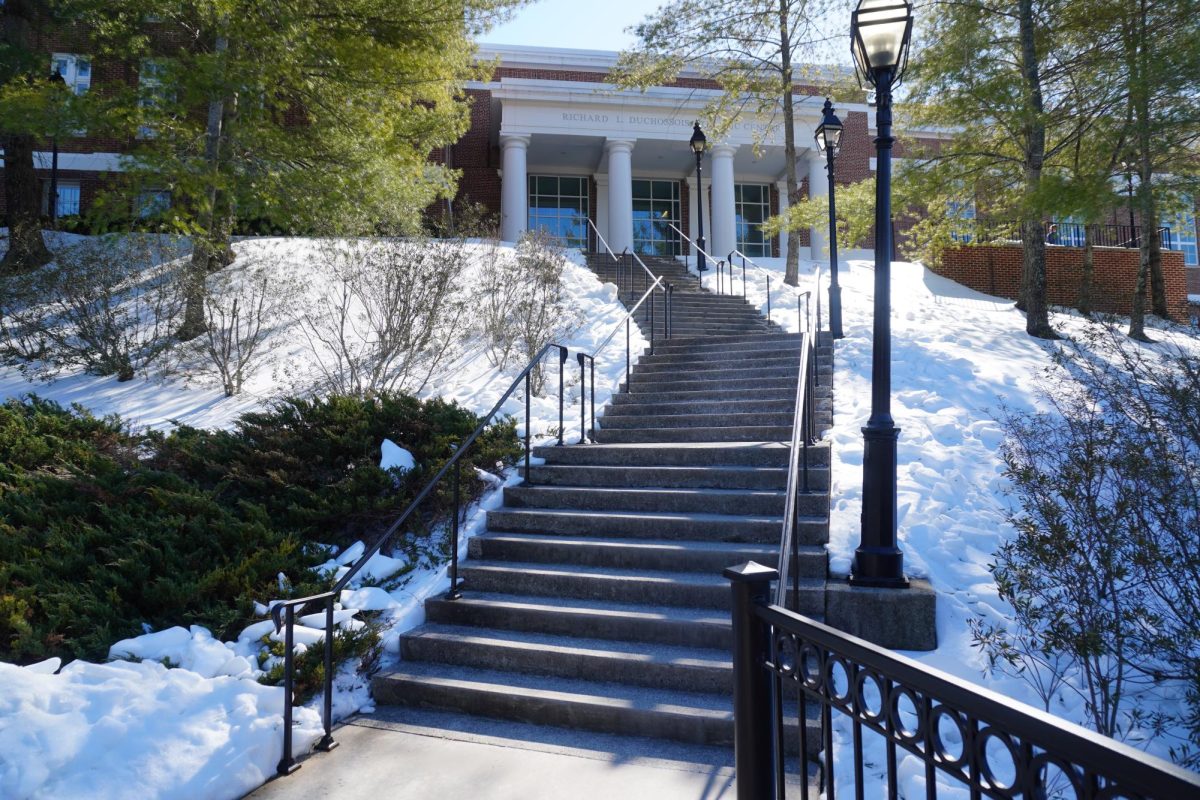
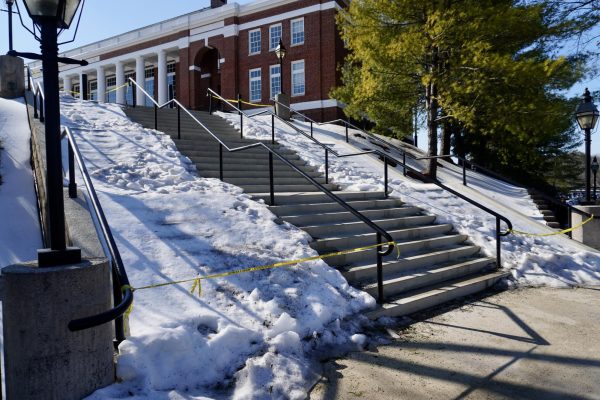
The university’s brick walkways, hills and tall staircases can be challenging for students to navigate, especially for those with injuries or disabilities who rely on crutches, wheelchairs or walking aids.
“People are talking about it,” Blackwood said. “It’s just trying to find the right solution.”
Blackwood said staffing shortages have limited Public Safety’s ability to provide rides.
“In the past, Public Safety has been very helpful with giving students rides to various places,” he said. “But because they’ve gotten so short-staffed, sometimes they’re not always available. It’s not 100%.”
If implemented, a new resource could help students like Liam Wells, ’29, who tore an artery along his knee after a failed backflip attempt last semester. The injury forced him to move around on crutches and wear a leg brace.
Injuries can affect students’ commute times, even on a small campus.
“I’d say it’s about doubled,” Wells said when he was interviewed last semester.
His French class in the Center for Global Learning building was the farthest from his Gaines dorm. Before his injury, it took under 10 minutes. After, it took 20 minutes.
Wells said he planned his days strategically, taking fewer trips and leaving early to rest during the commute and avoid being late.
When he first got injured, Wells said the health center told him that Public Safety could drive him to class. But when he called, they told him that they could not.
“I believe that the health center was under the impression that I could call them if I was having difficulty getting to class. And I did at one point in time,” he said. “I spoke to the dispatcher, and they just said, ‘No, we don’t do that,’ which sucked.”
However, Wells added that Public Safety was very helpful during emergencies and in taking him to appointments.
Chief Public Safety Officer Alex Rabar declined to answer questions but pointed to the university’s disability resources website, which contains no official policy ensuring transportation assistance from Public Safety. The website states that students with temporary impairments are responsible for arranging their own mobility support, including obtaining any required authorization, approval and insurance.
Some injured or mobility-impaired professors also struggle to navigate the campus.
Toni Locy, a journalism and mass communications professor, has been required to periodically wear a walking boot because of a neuroma, a benign nerve tumor in her foot that causes stabbing pain.
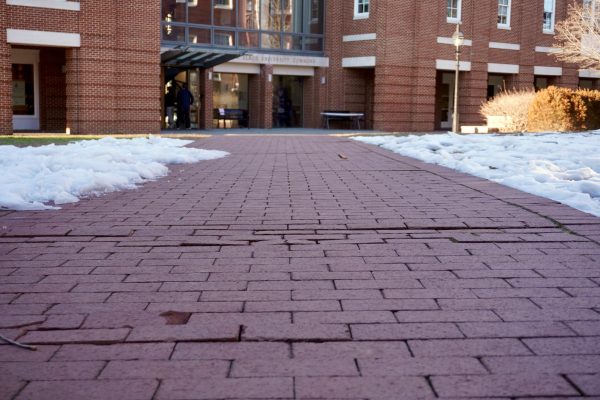
To avoid discomfort and the risk of falling, Locy said she takes elevator-accessible routes, avoids brick paths and walks more slowly.
“The worst part of this campus is walking on the bricks because they’re uneven,” Locy said. “And these boots rock, and our bricks don’t. You don’t want to rock on our bricks because you’re going to fall.”
Locy said she supports the idea of a new transportation resource.
“It would be great if they did that,” Locy said. “When I’m coming from the parking garage, it’d be nice if somebody could give me a ride. I’d take it!”
She also said school-sponsored transportation could prevent further injuries.
“We do have a lot of student athletes, and they get injured, and it’s sad to see them having to struggle around like that,” she said. “They could fall and get injured even worse, and that, to me, is dangerous.”
Blackwood said the health center sees 10 to 20 students with leg injuries each year.
Shay Bowman, ’27, was one of those athletes after she injured her knee at a Generals soccer game in September. She was on crutches and then walked with a brace.
Bowman said she also faced longer commute times than her usual five- to 10-minute walk.
“When I had crutches, I would have to leave 30 minutes early just to get to class because it’s exhausting, and you have to take breaks,” she said.
She said she considered asking for a handicap parking pass, as she had a car on campus, but realized that few spots would get her that much closer to campus.
The transportation proposal remains in early discussion, but Blackwood said that the conversation itself is an important step.