


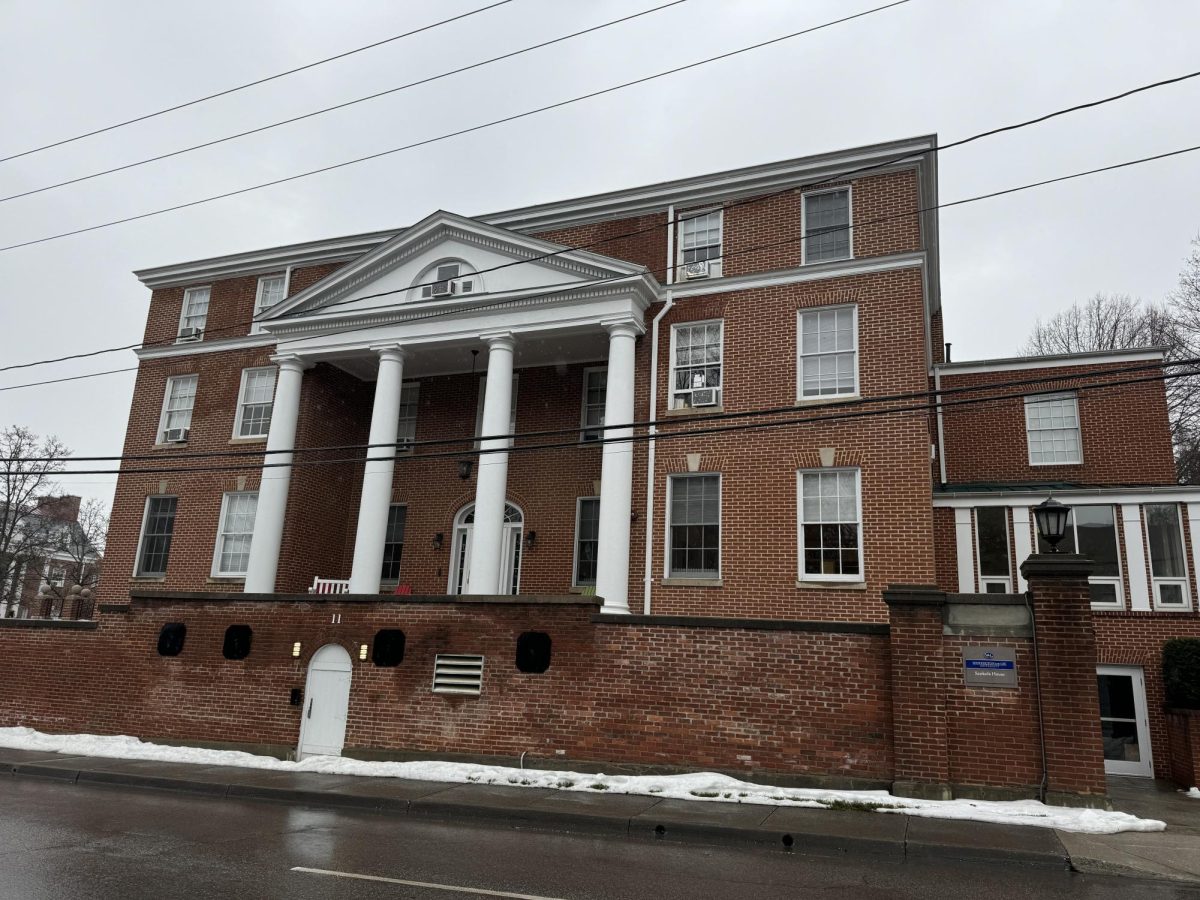
Washington and Lee University will no longer offer theme housing for its upper-division students, beginning with this spring’s housing lottery.
“The seven current theme houses will be converted to general student housing and referred to as community-style housing, where they will continue to accommodate undergraduate students, but without themes,” said Chris Reid, assistant dean and director of housing and residence life, in a Feb. 5 email to the student body.
Many of the theme houses are centered around different cultures and aim to provide a space where those cultures are promoted.
Nuestro Hogar Latino, for example, is geared toward students interested in exploring Latin American and Caribbean cultures, according to the university’s website. Casa Hispánica aims to help students improve their Spanish-speaking skills, and Sankofa House accomodates students interested in the history and heritage of the African diaspora, according to the university.
But last year, only about 8.5% of theme house beds were filled through the theme housing process that typically takes place every February, according to Reid. This was the lowest level of interest in five years, he said.
The rest of the beds in those houses were filled during the general housing lottery by students who may not have been interested in living somewhere with a theme, he said.
“This created confusion and concern among students who had to select theme housing when other spaces reached capacity, with little or no affinity toward the themes,” Reid said in the email.
But the small percentage of students who chose to live in theme houses have built communities in them.
Leyti Ndiaye, ’26, a resident of Sankofa House, said he had mixed feelings when he heard that the university would move away from theme housing.
“Honestly, at first I was upset hearing about the change. I really didn’t understand why they wanted to split communities apart,” Ndiaye said. “Then I took a step back and [looked at it] from a bigger lens.”
The school parting ways with theme housing makes sense, he said, because there seem to be more students coming in each year and eliminating themes may make students more inclined to live in the houses located off campus.
“Yes, right now it seems like a big deal. But after four years where everything phases out, it will be the norm,” he said.
At the same time, Ndiaye said, it will be disappointing for younger students who chose to live in theme houses and will no longer have the option.
Katia Apedoh, ’28, said she understands the university’s decision to convert the theme houses to general housing, but she thinks the elimination may be harmful to students of color.
“Chavis House, for example, is a gathering spot for Black students, and there is no guarantee that it will remain as such in the coming years,” she said. “I do not believe that erasing all themed houses is fair to the marginalized communities that use these houses as safe spaces.”
Next school year, the “community-style houses” will be referred to by their street address except for Chavis House, which will keep its name, Reid said. Chavis House was named after John Chavis, the university’s first Black student.
The university has previously converted off-campus fraternity houses into both theme housing and general student housing. The former Phi Zeta Delta house has served as general housing since the fraternity was suspended in 2023.
Last year, Nuestro Hogar Latino moved to a new location after Sigma Nu returned to campus and reclaimed its fraternity house, which had been home to the Latinx theme house, according to previous reporting by the Phi.
But if more previously suspended fraternities return to campus, they would not be guaranteed their original houses back, Reid told the Phi. If more fraternities did come back, he said, there would still be enough housing for students.
“Housing assignments are based on enrollment each year and total number of beds. A fraternity returning and filling their beds, for example, will open up vacancies elsewhere,” Reid said.
But while removing themes might help the university fill beds more easily, Connor Lafo, ’26, said that community in the houses might be harder to come by.
Lafo previously served as a Community Assistant (CA) for the Sustainability House, a theme house dedicated to promoting environmental sustainability. By the time he lived there, he said, the theme was not central to the community in the house.
But he said he thinks removing theme houses that are identity-based is a mistake because many of them have built up strong communities.
“I think the themes are important when the theme is something that actually gives people a shared identity,” Lafo said. “At least with my experience, when there’s no theme and people are just there for the house, it doesn’t really have any unifying culture.”