


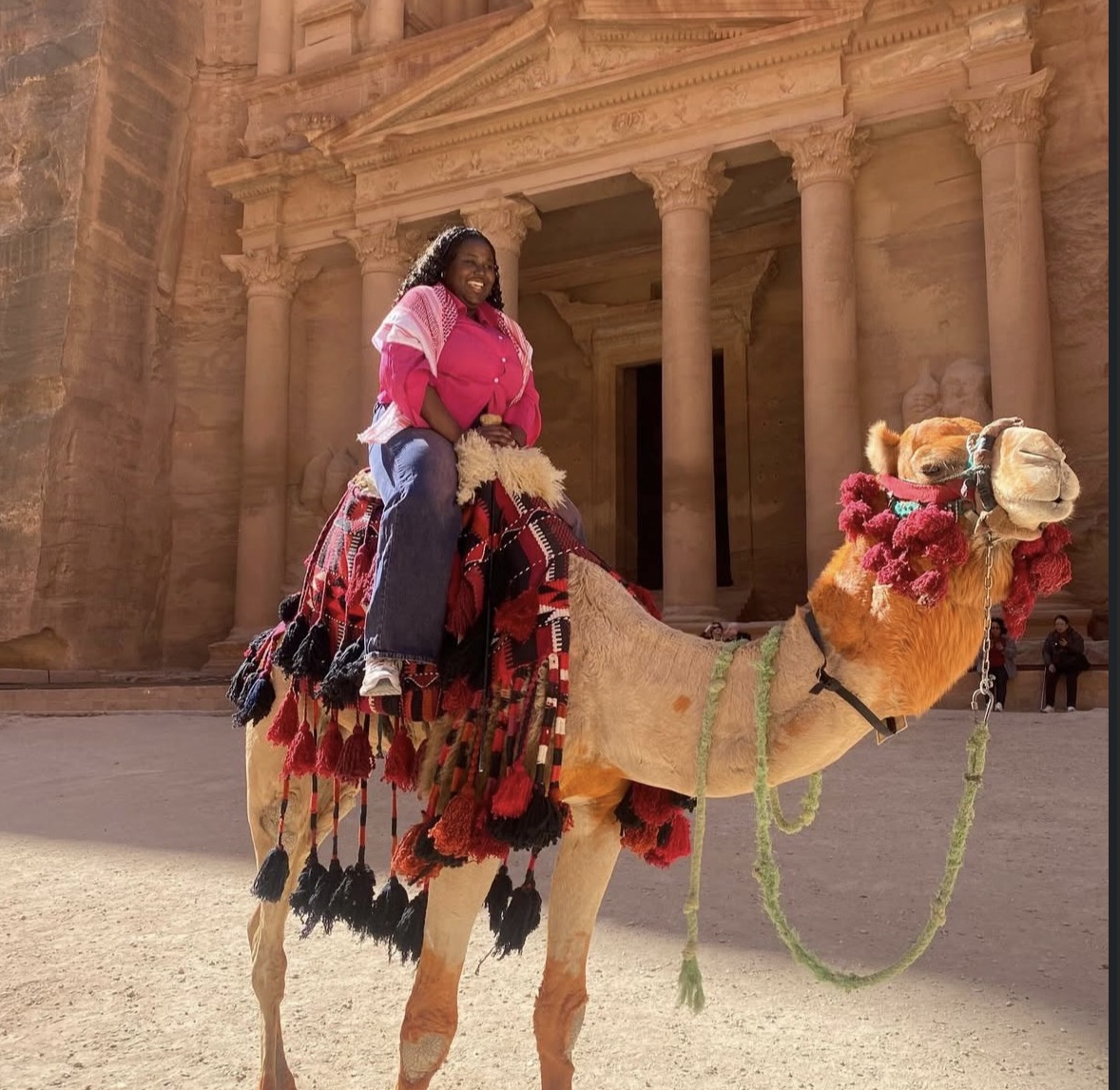
In January, Makane Kane ’27 arrived in Jordan for her first college study abroad experience. She quickly built relationships with locals, bonded with her teachers and settled into a steady academic routine.
But a month into her trip, the United States and Israel began striking Iran, forcing Kane to evacuate.
The U.S. and Israel began attacks on Iran on Feb. 28 in an attempt to permanently degrade Iran’s military capability. Jordan is located to the east of Israel and near Iran, placing the country in the middle of the conflict.
As of March 17, over 3,000 people have been killed in Iran, according to the U.S.-based group Human Rights Activists in Iran. Iran has retaliated by targeting Israel as well as U.S. bases and allies in the Gulf. The fighting has spread beyond Israel and Iran to include Lebanon, and there have been reports in other Middle Eastern countries of attacks.
On March 2, a representative from the U.S. embassy called Kane strongly suggesting she leave Jordan. Soon after, her program director informed students they had to evacuate Jordan.
Despite thinking she heard some military interceptions and her classmates seeing explosions from afar, Makane said she would have liked to stay in Jordan. “I didn’t feel unsafe any time of my life in Jordan,” she said.
Now, instead of going to classes in-person, interviewing locals and practicing Arabic with her Jordanian language partner, Kane participates in the program virtually. She is sometimes online for over six hours a day, taking classes and communicating with her language partner.
“It’s good and all to speak on the computer, but the experience you actually get by speaking to people and the gateway to understanding people’s culture is actually speaking their language and seeing how to use it,” she said. “We’re actually missing out on a lot of that, and it feels like a setback.”
In January, Thomas deBuchananne, ’27, arrived in Jordan for a semester abroad program through Middlebury Schools Abroad. He took four classes in Jordan and developed deep relationships with his host mom and local Jordanians.
But deBuchananne was forced to evacuate to Morocco after only being in Jordan for a month and a half.
“It was general chaos in not knowing what was going on,” deBuchananne said.
deBuchananne was with his friends hiking the tallest mountain in Jordan when he heard about the attack on Iran. He said he remained optimistic that he would be able to stay in Jordan.
However, a few days later, the State Department released a post on X that was later deleted urging Americans to leave Jordan. On March 5, the Middlebury program manager informed deBuchananne and the rest of his cohort they would need to leave Jordan and go to Morocco.
“I remember being on the plane to Morocco, and it still didn’t really sink in that I was leaving Jordan because it was only 30 hours before we were told that we would have to leave,” he said.
Aside from shifts of language, culture and location, deBuchananne said he experienced significant changes in Morocco. One of his Arabic classes that was originally focused on Jordanian dialect was switched to Moroccan dialect. Instead of staying with a host family, deBuchananne now lives in an apartment with a fellow member of his cohort.
“The biggest difference is not having a host family anymore,” deBuchananne said. “It’s a little bit harder to get the immersion experience.”
deBuchananne said he has not been in Morocco long enough to form many deep connections with locals.
“Being a foreigner in Morocco isn’t as novel as being a foreigner in Jordan,” he said. “It’s a bit harder to just strike up a conversation with anybody.”
The conflict could impact future study abroad programs as well.
Brandon Bishop, ’26, was named a Fulbright finalist in February to participate in the English Teaching Assistant Program in Jordan. The Fulbright program is a merit-based international educational exchange program fully funded by the U.S. government. If Bishop gets the Fulbright, he will be teaching English in Jordan.
Bishop said the program told him that interviews would be conducted by June of this year. He has not received any confirmation about when his interview will be scheduled and hasn’t heard anything directly about the conflict in Iran.
“There’s been no communication, partly because the U.S. embassy there is evacuated,” he said. “Since the program is coordinated through the embassy, if it stays evacuated, there wouldn’t be anyone to coordinate the program or even communicate with us.”
Bishop said there is still time, and he could hear from the Fulbright embassy before June.
But he said the uncertainty around if and when the program will take place is difficult.
“I know there’s still a chance that even with no communication, they could suddenly tell us to pack and go,” he said.
Despite the ongoing conflict, Bishop said he would feel comfortable studying abroad in Jordan.
Because he knows the Fulbright is uncertain, Bishop said he has applied to graduate school, academic programs and jobs in the U.S. and abroad. However, he said he is optimistic about the Fulbright opportunity.
“I think if it happens, we’ll find out very late,” he said. “I also don’t think they’ll officially cancel it early. They’ll probably wait and hope the situation improves.”
deBuchananne, too, is trying to make the best out of his situation. He said he is looking forward to visiting the cities of Tetuan, Chefchaouen and Essaouira.
“I just hope the situation resolves soon,” he said.


