


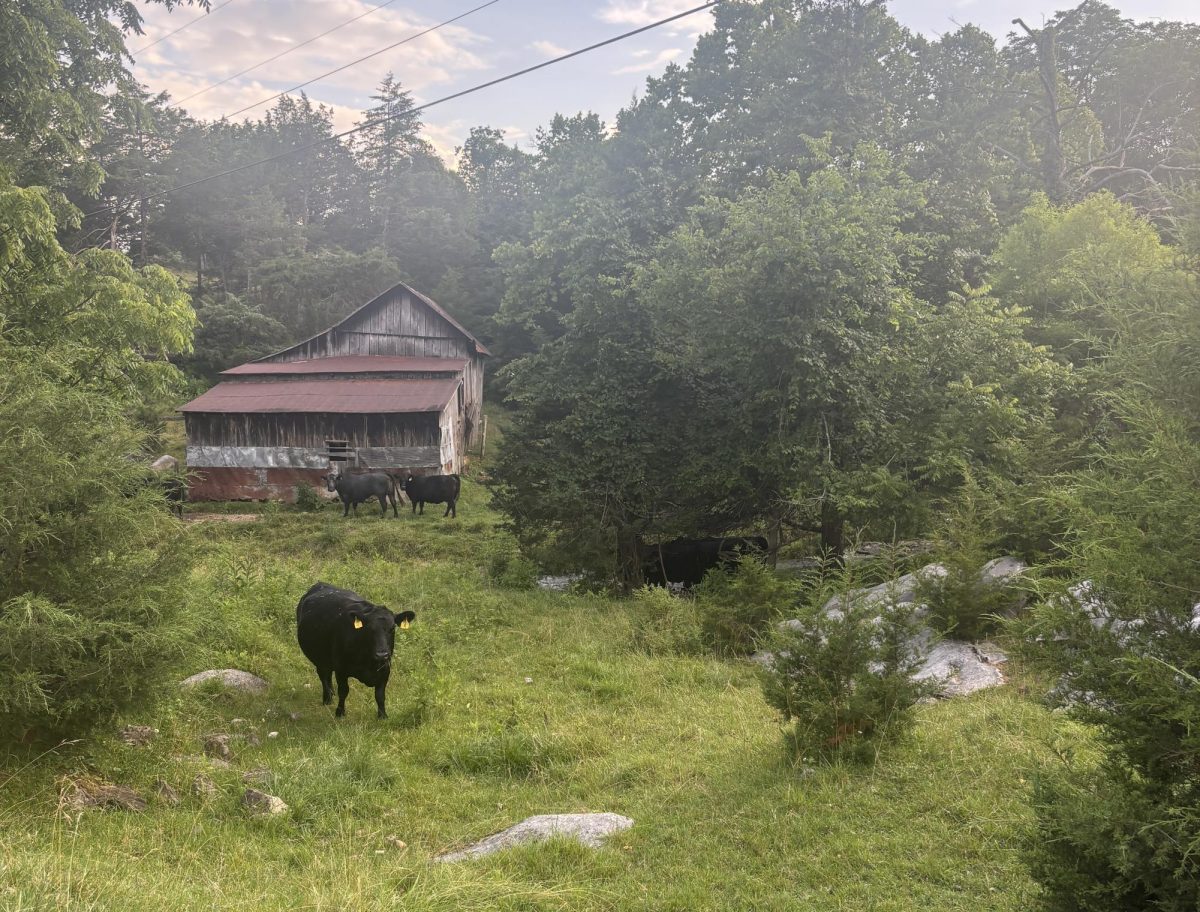
About 15% of the class of 2029 is from a rural area, according to the 2029 class profile.The university aims to increase the student body percentage to 20%, mirroring the percentage of the U.S. population who live in rural areas.
University admissions began tracking whether a student is from a rural or urban area three years ago, using U.S. Census data, said Sally Stone Richmond, the vice president of admissions and financial aid.
While the university doesn’t use different recruitment strategies for rural students, Richmond said she hopes that need-blind admissions helps attract them to the university.
Two rural students, Katie Beth Young, ’28, and Allison Glover, ’28, both said financial aid was a top priority when applying to colleges, and one of the reasons they chose W&L.
Glover said she tried applying to schools that had fee waivers, and W&L sent her a waiver in the mail.
“That was really big for me,” Glover said. “And then I ended up choosing here because I got the largest amount of financial aid.”
Although Young and Glover both ended up at W&L, they said the admissions process was rocky without a lot of support.
Neither of Glover’s parents went to high school, and she said she didn’t receive any advice from her guidance counselor. She navigated her admissions process through her own research and a friend who was also applying to liberal arts colleges.
“We kind of would help each other and bounce our ideas off of each other and edit for each other our essays and activity sections based on what we had read,” Glover said. “So [there] wasn’t really an adult in the process, but we were kind of helping each other in that way.”
Young had a similar path. She combined her own research with insight from watching her older sister navigate the admissions process to educate herself, apply to schools and find the best fit.
Young said 50% of the staff at her high school left between her sophomore and senior year, including her guidance counselor, which made getting advice from adults much more difficult.
The American School Counselor Association recommends a ratio of 250 students to one guidance counselor. Both Young and Glover only had one guidance counselor at their high schools, which both had more than 250 students.
Another rural student, Ryan Handy, ’29, also only had one guidance counselor at her high school, but she said her counselor was a huge help during her process.
“If we needed anything from her, all we had to do was ask,” Handy said.
Handy is a QuestBridge scholar and said her guidance counselor read her personal essay four separate times.
QuestBridge is a program that matches low-income, high-achieving students to colleges across the country. Handy heard about QuestBridge through a letter she received in the mail but said her counselor had also heard of it.
Glover, on the other hand, said she didn’t hear about QuestBridge until she arrived at W&L.
“I got here, and I was like, ‘That would’ve been a great thing to know,’” Glover said.
Mat Rapoza, ’03, a former guidance counselor at Rockbridge County High School, said many rural counselors don’t know what QuestBridge is, and it can be one of the most helpful resources.
Rapoza is Washington and Lee football’s offensive coordinator and assistant coach, but he worked at the high school for 14 years before coming to the university. He said that while Rockbridge County is considered a rural high school, it’s very different from other rural areas.
With Virginia Military Institute and Washington and Lee in town, a lot of the students are professors’ children.
“You’re just as likely to be talking to a student about Harvard or Yale as you are talking about the diesel school down in Nashville,” Rapoza said.
When Rapoza first got to the high school, he said he was assigned the entire ninth-grade class and counseled them throughout their four years. When they were all seniors, he said writing more than 200 recommendation letters was a monumental task.
“Unless someone’s arm fell off or something drastic happened, I’m shutting my door and writing these letters,” he said.
The counselors would work together to ensure that all students were taken care of, he said. While he was busy writing letters, the other counselors would talk to his students when they needed something.
Rapoza said higher education is not foreign to Rockbridge County students because they grew up with it, but some rural students at Washington and Lee said it was a huge adjustment.
“For a second, it felt like I was just kind of being dumped in the middle of the ocean,” Handy said. “W&L isn’t that big, but still, there’s more people in my class now than there were in my whole high school. So it’s like, whoa.”
For Young, the biggest shock when coming to W&L was how prepared other students were for college.
“I was surprised at how many people had more help and more people telling them what to do, or people who specifically had a college admissions counselor,” Young said. “Because even the counselor at my school, she was just like the general guidance counselor for the high school.”
Glover said coming from a rural area to a small, close-knit community at W&L made the transition a little bit easier, but it was still a big adjustment. She said she’s from a poor area and grew up only seeing people from the lower or middle class.
Glover said her first semester “was like culture shock on every level, between meeting people from backgrounds that were unfathomable to me to even being in class with people who went to private schools who were prepped for this type of environment.”


