
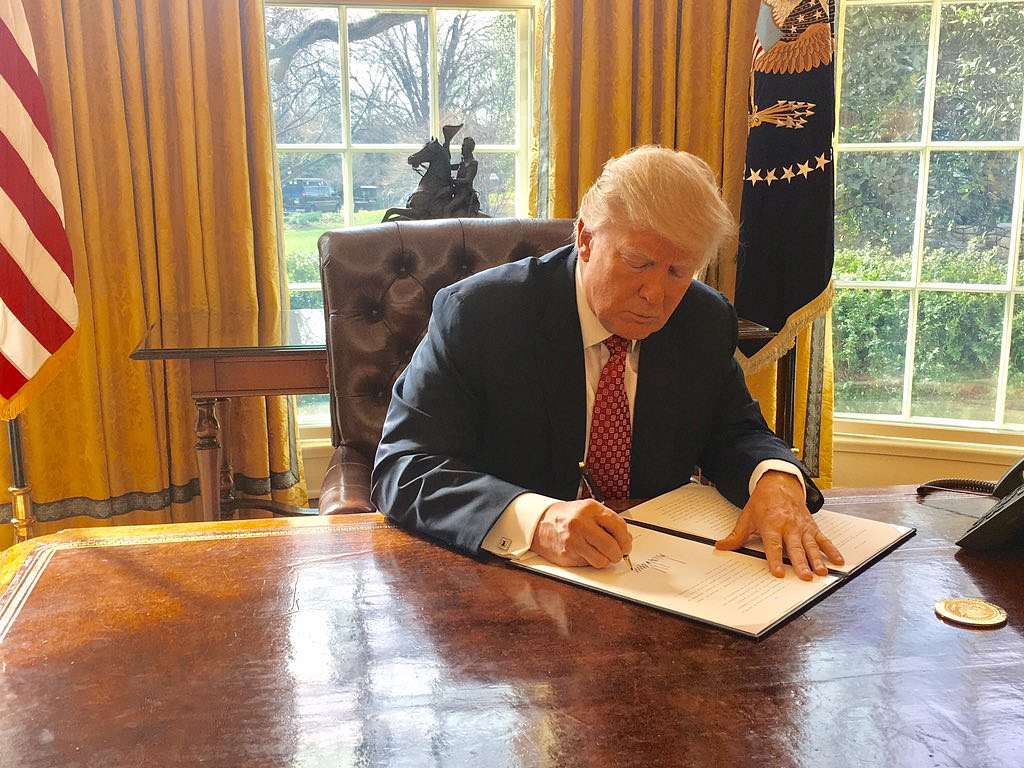
America has always been defined by a simple yet profound promise: Talent, hard work and determination matter more than the circumstances of a person’s birth. Last week, that promise took a devastating blow. According to the New York Times, President Trump signed an executive order imposing a $100,000 application fee for H-1B visas. Effectively, this puts a price tag on the American Dream that most aspiring immigrants simply cannot afford.
My own family’s story embodies what America once stood for. Both sides immigrated during the 20th century, arriving with little more than hope and determination and bringing skills that would contribute to America’s post-war growth. They didn’t need six-figure bank accounts to prove their worth. They only needed the opportunity to demonstrate their value through their contributions to American society.
My dad, who was raised by Irish immigrants, always references Bruce Springsteen’s “American Land,” a song about immigrants who came here wanting to make their home in America. There’s a line about “diamonds in the sidewalk” that captures something essential about the immigrant experience: the ability to see opportunity where others see only concrete, to find potential in what appears ordinary. That optimism, that vision of what America could offer, drove generations of immigrants to build the nation we know today.
Now we’re stripping that away. The administration justifies this move by claiming the fee is intended to boost jobs for U.S. workers, but the H-1B visa system has been a cornerstone of America’s technological dominance. The engineers, researchers and entrepreneurs who have come through this program haven’t taken jobs, but instead, they’ve created entire industries. From Google’s Sundar Pichai to Tesla’s Elon Musk, immigrant founders have generated millions of American jobs and trillions in economic value.
This $100,000 barrier for skilled workers and the simultaneous introduction of a “gold card” visa with a path to U.S. citizenship for $1 million reveals a troubling shift in priorities. America now welcomes the wealthy first, the talented second and everyone else not at all. This fundamentally contradicts the meritocratic ideals that made America the world’s beacon of opportunity.
As global competition for talent intensifies, America is choosing to make itself less attractive to the very people who have historically driven our innovation economy. Meanwhile, countries like New Zealand are streamlining their immigration processes to attract the same talent we’re pricing out, according to the Independent. Trump’s surprise announcement sparked fear and confusion among foreign workers, many of whom are already contributing to American companies and communities, according to the Wall Street Journal.
For current college students planning careers in STEM fields, this policy creates a chilling effect. International students who might have stayed in America after graduation, contributing their skills to American companies and paying American taxes, will increasingly look elsewhere. The gradual pipeline that has sustained American technological leadership for decades is being systematically dismantled.
Our nation’s greatness was built by those who earned their place through contribution. The immigrant engineer designing medical devices that save lives, the foreign-born researcher developing cleaner energy technologies and the international entrepreneur creating the next generation of American jobs are the people we should be welcoming, not pricing out.
If my family had faced a $100,000 fee in their time, I wouldn’t be here writing this piece at Washington and Lee. Neither would countless other Americans whose families contributed immeasurably to this nation’s success. We’re abandoning the fundamental principle that America’s doors should open for those who can contribute, regardless of their ability to pay exorbitant fees.
The $100,000 H-1B fee doesn’t protect American workers. It blocks America from the very talent and ambition that built our nation. The diamonds in the sidewalk that generations of immigrants saw when they looked at America? We’re making them invisible to all but the wealthiest. We’re taking the optimism and opportunity that defined the American experience and putting it behind a paywall that most of the world’s talented people simply cannot afford.
The people who wanted to make their home in our homeland now face barriers that have nothing to do with their potential contributions and everything to do with their bank accounts. Now we risk making America ordinary when it was built to be extraordinary.


