

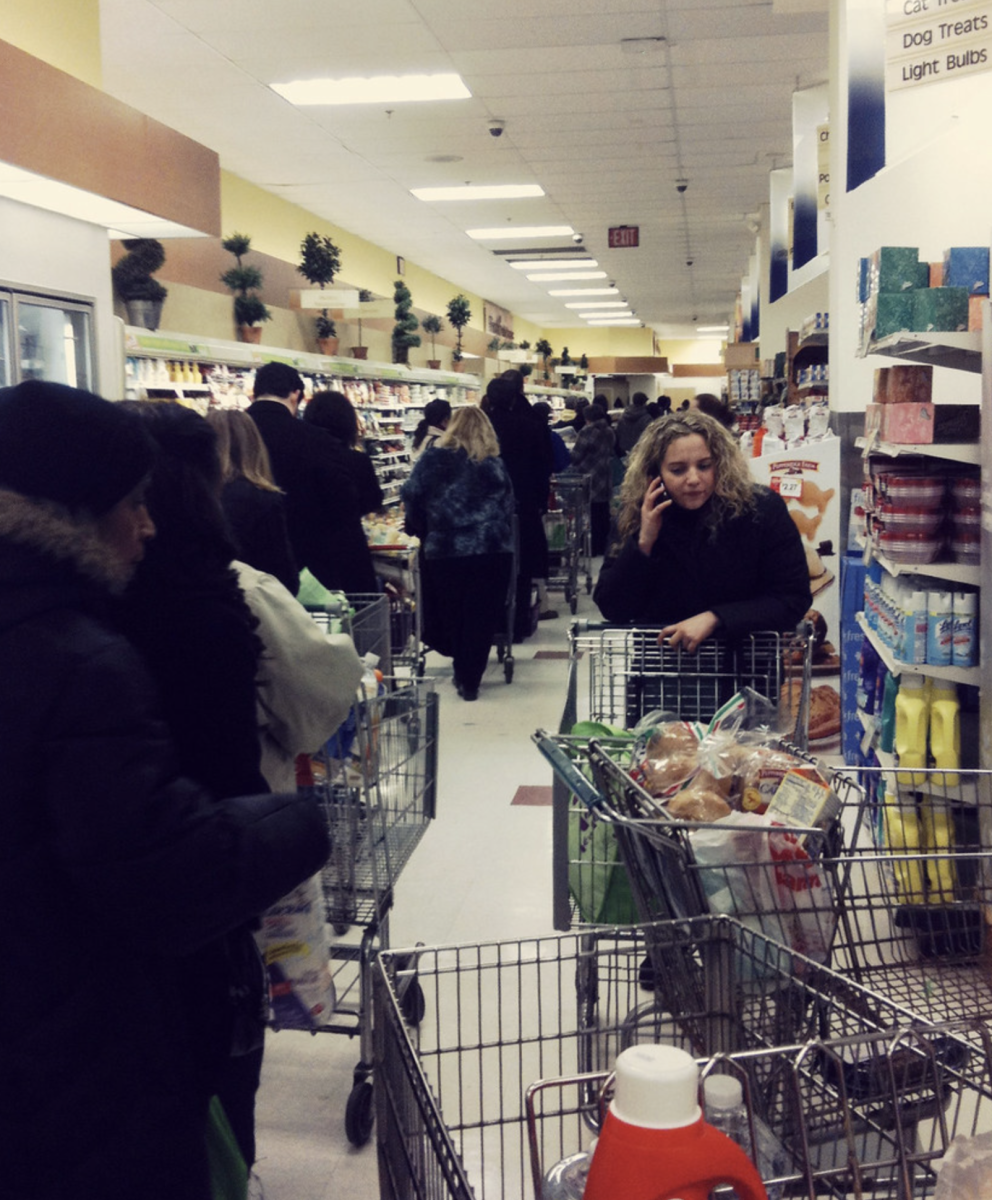
During the longest government shutdown in U.S. history, the federal government halted the Supplemental Nutrition Assistance Program (SNAP), stranding millions of Americans without food assistance and sparking legal battles. The prolonged government shutdown has led to disastrous economic consequences for many American citizens. From flight delays to the halting of food stamps, Americans are not immune to Congress’s divisiveness.
According to the Wall Street Journal, the federal government pays out $100 billion a year in food assistance to 42 million Americans through SNAP. Not only do American citizens rely on SNAP benefits, but American retailers also count on SNAP for 9% of their sales in non-restaurant food spending, according to the Wall Street Journal.
When the shutdown began, those benefits came to a temporary halt.
On Friday, Oct. 31, a federal judge ordered the Trump administration to use emergency funds to pay for the benefits. President Donald Trump responded by saying he would block the order until Democrats voted to reopen the government.
Many state attorneys general, such as Matthew J. Platkin of New Jersey, criticized the federal government, arguing that the government’s attempt to slash food stamps was “heinous.” According to the New York Times, despite having an ample amount of funds in reserve, President Trump refused to supply money for food stamps, a contrast to his decision to reprogram billions of dollars to fund mass deportations.
Although the Senate passed legislation on Monday, Nov. 10, to end the government shutdown, its economic aftershocks are expected to continue. Such effects include reducing economic growth by about 1.5 percentage points and causing $11 billion in permanent economic damage. The six-week shutdown is estimated to have cost the airline industry $2.6 billion. It also affected hotels and restaurants.
While SNAP benefits are scheduled to resume, the shutdown demonstrates a larger problem with the current administration. Unity came not because of compromise but rather to end public suffering.
The Trump administration’s willingness to pursue legal battles over sending out food stamps does not conform to the idea of a nation founded on governance for the people. Rather, the initiatives reflect a disregard for the lower class, especially families with children – an ill-willed political maneuver.
In contrast, the Biden administration’s American Rescue Plan Act of 2021 was a nearly $1.9 trillion COVID-19 relief package that sent out stimulus checks to American households to help recover damages from the economic effects of the COVID-19 pandemic. While Trump has touted the idea of a $2,000 dividend to Americans because of the impact of tariffs, this is unlikely to develop into a legitimate plan, according to PBS.
The American people continue to face financial pressure from tariffs and inflation, along with a continuously expanding national debt, which currently stands at $38 trillion, according to the U.S. treasury website. Millions of Americans, both those who rely on SNAP and non-SNAP recipients, face economic uncertainty as the shutdown nears an end. The politics of the shutdown show that the most vulnerable Americans are not always valued for their own sake and instead are used as tactics to pass legislative agendas.


