


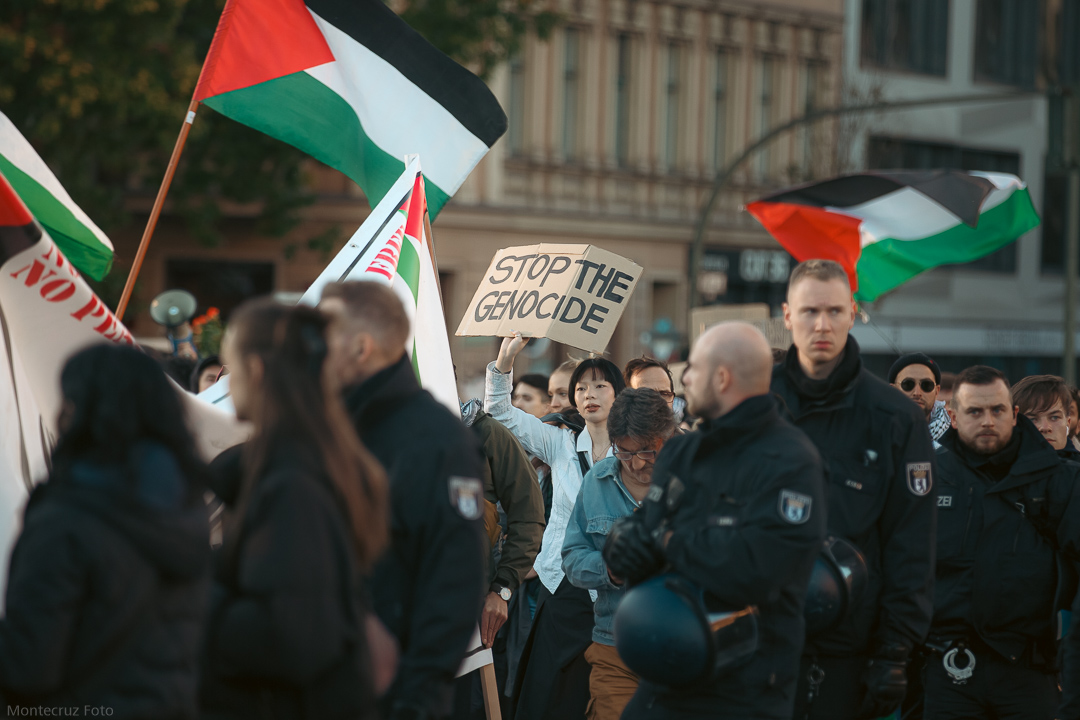
As of Nov. 30, the death toll in Gaza has surpassed 70,000, according to NBC News. Despite the cease-fire brokered by President Donald Trump in his “Gaza Peace Plan,” 352 Palestinians have been killed since it took effect on Oct. 10.
While these continued attacks are said to have been directed at combatants, the strikes do not differentiate between civilian and combatant areas. According to NBC News, an Israeli drone struck a school sheltering displaced Palestinians in Bani Suhailia on Nov. 29, killing two children, ages eight and 11.
I do not write any of this to take away from the devastation experienced on Oct. 7, 2023, when about 1,200 Israelis were killed and about 250 people were taken hostage. This attack was led by Hamas, a militant group that seeks freedom “from the river to the sea,” according to the Wilson Center. This is a reference to the West Bank, East Jerusalem and Gaza territories of pre-1967 Palestine.
Hamas said its Oct. 7 attack was not based on antisemitic principles but as a response to what it described as decades of oppression from the Israeli regime as settlements expanded and Palestinians were displaced.
This article is not meant to debate who holds a historical claim to the land but to draw attention to the contemporary atrocities Palestinian citizens are experiencing two years after the war began in 2023.
The human rights group Amnesty International concluded in December 2024 that Israel was carrying out a genocide in Gaza. It cited three conditions: “killings, causing serious bodily or mental harm and deliberately inflicting on Palestinians in Gaza conditions of life calculated to bring about their physical destruction.” The Israeli military currently occupies between 54-58% of the Gaza Strip, with the Palestinian people able to live in less than half of Gaza’s territory. Gaza’s land has been rendered infertile and unlivable by continuous bomb strikes.
Furthermore, Israel has prevented the flow of food, medical care and other necessities into the Gaza Strip. This is a violation under international human rights law, which requires an occupying power to allow these resources to enter the territory. According to Reuters, some limited aid has been allowed in but fails to sufficiently account for the need. Doctors Without Borders said on its website that the organization has even been threatened with being “unauthorized” to deliver aid if it is seen as delegitimizing the state of Israel.
This brings the discussion to a crucial point: Is criticizing Israel’s occupation and treatment of Palestinians antisemitic?
I would argue no. Criticizing a government that has been internationally condemned should not be conflated with hate speech against Jewish people or their faith. Likewise, Jewish college students should not be made to feel unsafe on their campuses, nor should they be discouraged from participating in Jewish events. I believe there is a line to be drawn that can bring awareness to ongoing atrocities in Gaza without holding Jewish students accountable for a government they might not even support or know about.
Similarly, Muslim students and other students who express solidarity with Palestinian efforts should be tolerated on campuses so long as their criticisms target policy and government actions rather than Jewish people or their practices. Critiques of Zionism — which is notably a political ideology, not a religion — should be permitted and welcomed as meanigful civil discourse, provided they do not devolve into antisemitism. Campuses should be spaces where difficult political conversations can occur without sacrificing mutual respect or religious tolerance.
Ultimately, we must maintain a clear distinction between government criticism and religious intolerance. The widespread suffering in Gaza demands global attention, yet that attention should never justify hostility toward Jewish communities, just as support for Jewish students should never silence legitimate concern for Palestinian lives. A just and ethically responsible dialogue requires that we protect both the safety of Jewish students and the rights of Palestinians to have their humanity recognized.


