


Editors’ note: This article was updated to reflect that all three law school representatives voted against the amendment requiring the bells in University Chapel be rung once a verdict has been reached in an open hearing.
The Executive Committee passed 23 amendments to the White Book on April 9 after receiving proposed amendments from the Constitutional Review Committee.
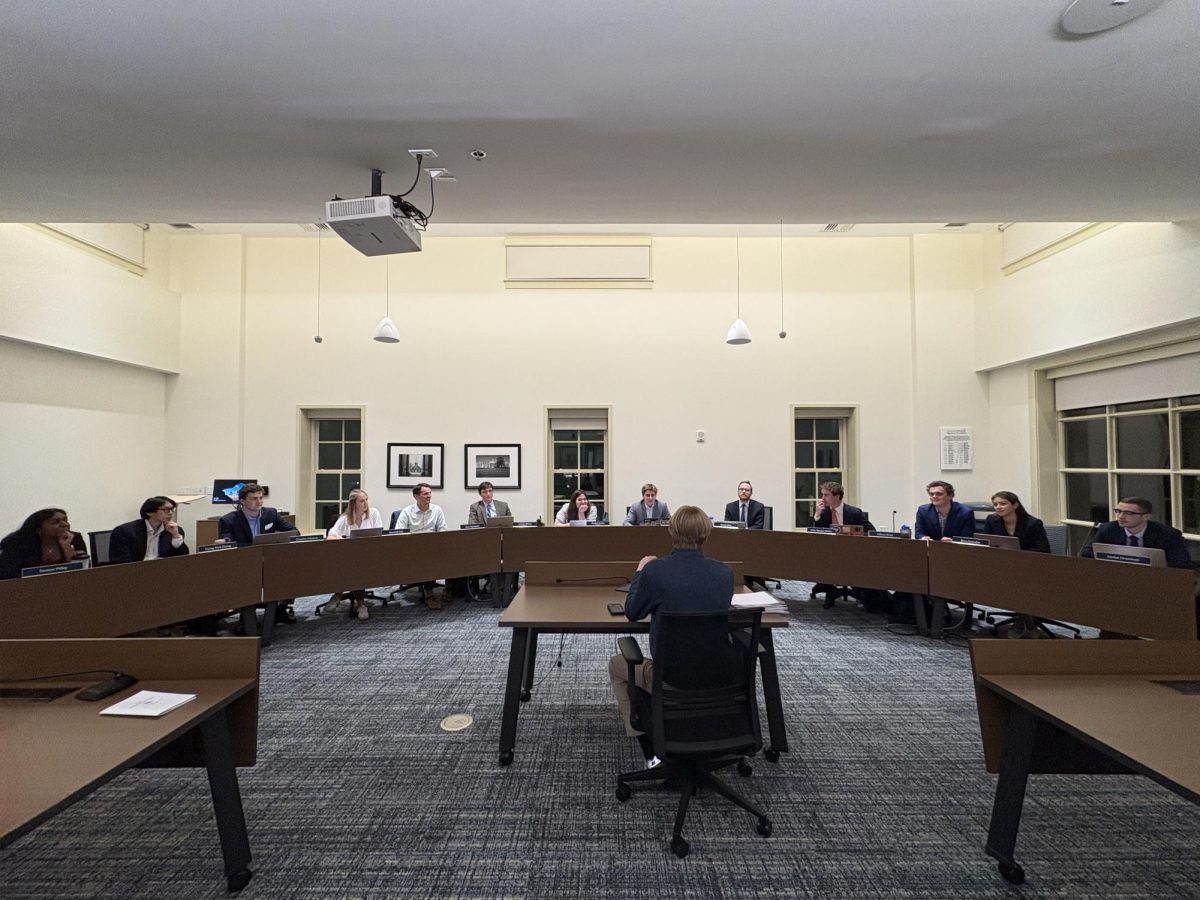
The CRC met with members of the EC on March 30 to present its amendment proposals. After several days of deliberations, the EC voted no on a majority of the committee’s proposed amendments — which ranged from implementing a multi-tiered sanction system to restricting attendance at student body hearings.
Any member of the CRC was permitted to submit amendments, and an array of opinions appeared in the proposed changes. Nearly 30 amendment proposals were submitted to the EC.
The CRC did not suggest any amendments to the Student Body Constitution. All of the proposals were suggested amendments to the White Book. The White Book is the governing document for the Honor System, while the Student Body Constitution outlines the system of student self-governance.
The CRC was formed in the fall term, with 18 student members selected. According to the Student Body Constitution, a CRC should be appointed every three years after the 2019-2020 academic year to “ascertain the opinions of those in the Washington and Lee community regarding all aspects of student self-government” and suggest potential amendments to the constitution.
This year, however, the Executive Committee voted for the CRC to also make White Book recommendations.
One of the CRC’s proposals called on the EC to implement a multi-tiered sanction system for honor violations, “with consequences up to and including removal from the University.” No ideas for what the other sanctions would be were included in the proposed amendment. This amendment was unanimously rejected.
Another proposal suggested law students should be punished through a multi-tiered sanction system, up to and including removal from the university — while undergrads would continue to face the single sanction of removal. This amendment was also rejected.
The EC also rejected a proposal to prohibit the general student body from attending a student body hearing, commonly referred to as an “open” hearing. The student body hearing allows students found guilty in an executive committee hearing, known as a “closed hearing,” to appeal the EC’s decision.
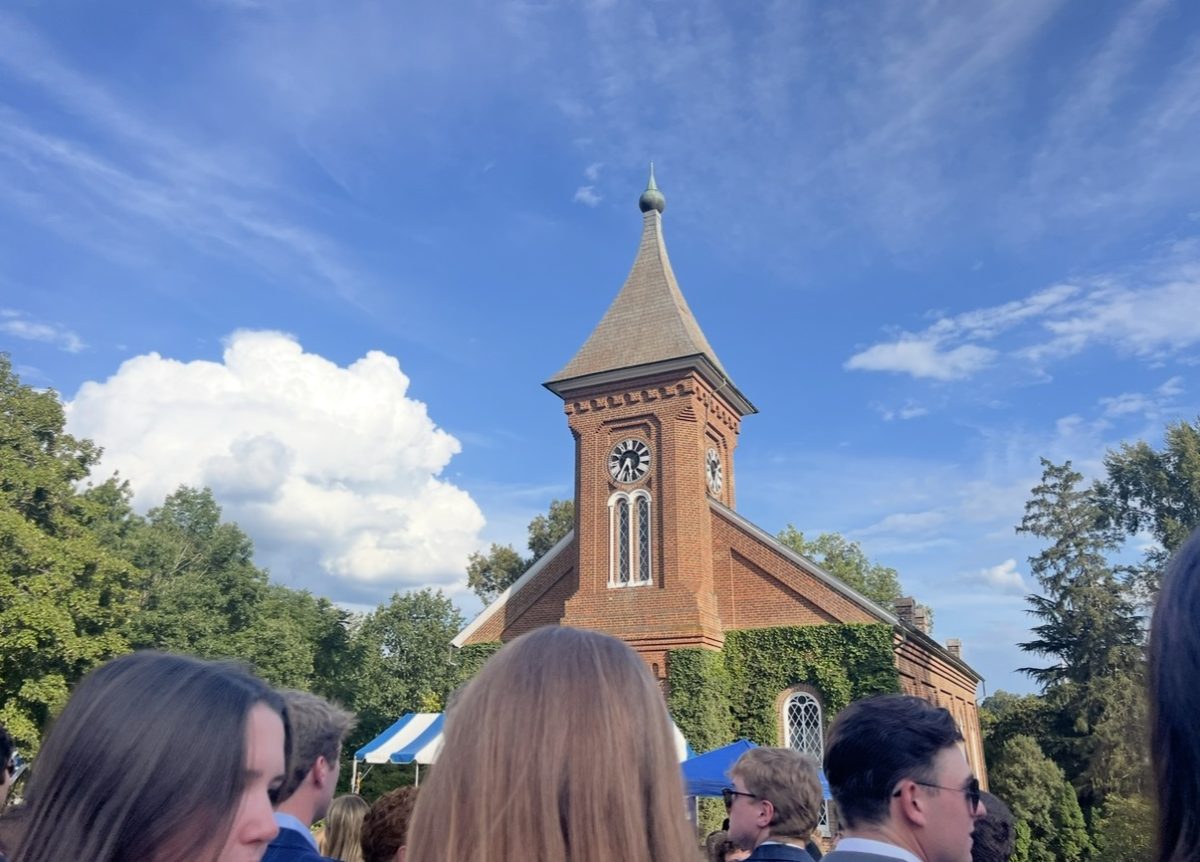
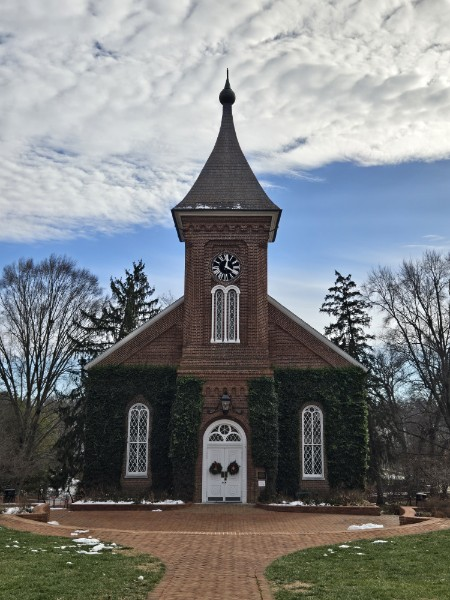
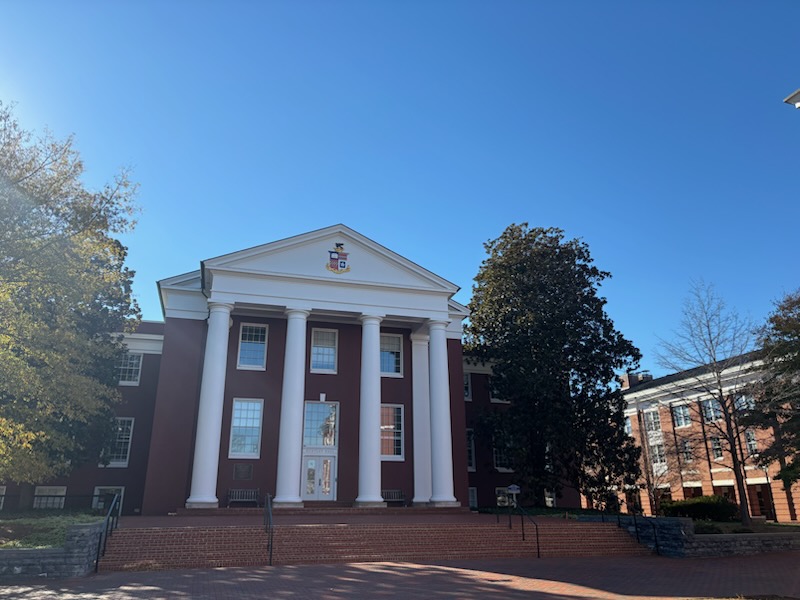
Instead, the EC proposed their own amendment to require that the student body hearing be held in University Chapel. Previously, the appealing student was allowed to choose if the hearing was held in the chapel or the Millhiser Moot Court Room at the law school.
If the chapel reaches capacity, the hearing will now also be livestreamed in an overflow room on campus.
Representative Zane Openshaw, ’27L, was the only nay vote on the chapel amendment.
“The current reading in the white book is not insufficient to our needs. To me, this doesn’t serve a purpose,” Openshaw said during deliberations. “I think we all need to understand the optics of us taking that option out of the accused students hands.”
John Beekman Youngblood, ’27, the EC vice president, disagreed with Openshaw. He said the only relevant difference between the chapel and the court is one of practicality.
“It serves the same purpose having it in the chapel or the moot court room,” Youngblood said. “The only difference is the capacity is more restricted in the moot court room.”
Any member of the EC is allowed to propose amendments to the White Book at any time, even without receiving recommendations from a review committee. The EC may adopt those amendments with a two-thirds vote from the EC in two consecutive votes, as long as those votes are at least one week apart.
The EC proposed several of their own amendments to the White Book during deliberations after receiving recommendations from the CRC. They convened one week later to vote on the amendments a second time.
Another EC-proposed amendment that passed requires that the bells at University Chapel be rung once a verdict in a student body hearing is reached and announced through email. This practice had been tradition during open hearings in previous years, said Meaghan Endres, ’26, president of the EC.
All three law school representatives voted against the amendment.
“My concern is that it turns it into a spectacle,” Openshaw said. “I totally understand the history of why we do it … but I think it’s too much … I’m concerned that this isn’t responsive to the feedback I received from my classmates.”
In a turn from deliberations the previous week, the EC voted not to change the composition of voting panels for open and closed hearings. During deliberations, the EC voted on two amendments that would require the voting panel to consist of students solely from the accused student’s school during a closed hearing, alongside the executive officers.
The first amendment proposed changing the composition of the voting panel for closed hearings. Under the amendment, the panel would consist of the three executive committee officers (president, vice president and secretary), the elected representatives from that person’s school, and quorum fillers to replace the Executive Committee members not from the accused student’s school.
The second amendment was proposed in tandem with the first to change the composition of open hearings. It would require the student jury of the closed hearings to reflect the composition of the entire university — nine undergraduates and three law students.
The EC passed both of the amendments 8-4 in initial deliberations. However, the amendments did not pass in the second vote.
Because the amendments didn’t pass a second time, the voting panels for open and closed hearings will remain as currently instructed in the white book: Elected members of the EC will vote during closed hearings, and a jury of 12 students during open hearings, with a majority being from the accused student’s school.
Endres, who originally voted in favor of the pair of proposals, voted against them in the second voting round.
“This was proposed as a compromise,” Endres said during the second vote. “I know that I personally voted for this because I thought it would be a good political compromise. However, it goes against my fundamental beliefs … The undergraduates are perfectly capable of adjudicating for the law students, and the law students are capable of adjudicating the undergraduates.”
Openshaw and Patrick Burr, ’26L, abstained.
“An open hearing really has the potential to cause a rift between the undergraduates and the law students,” Openshaw said. “I think it has a lot to do with this amendment that causes the jury to be mainly from the accused’s school.”
Several EC members voiced concerns that changing the voting panel composition for closed hearings could lead to “two separate honor systems.”
“I think we should face the same closed hearing panel regardless of school,” said Gibson Ward, ’27, an EC representative. “The fact that you have different panels means that students are likely to have two different outcomes.”
Several other amendments were passed during the second vote, including one requiring that an accused student be charged or their case dismissed within 21 days of the reported honor violation.
Many of the other amendments passed pertain to open hearing procedures. For example, the EC added a provision that the family of the appealing student shall not sit in view of the jury during an open hearing. An amendment was also added that requires students to be in professional dress to attend and shall “speak to each other with respect.”
Even though the CRC investigated the Honor System this year, the White Book will undergo another committee review process next fall, according to Endres. The White Book mandates that a committee to review the Honor System be established every three years, beginning with the 2023-24 academic year.